Sunday, February 6, 2011

Biofuel and its Effects on Land

The fuels produced by renewable resources such as ethanol, methanol, biodiesel, solar and wind (renewable energies) has so many considerable advantages over using declining supplies of fossil fuels.


Renewable fuels have gained in popularity due to their low contributions to carbon cycle, sustainability and in some cases, lower amounts of greenhouse gas effects.  The geo-political ramifications of these fuels are also of interest, particularly to industrialized economies which desire not too much dependence from Middle East countries where oil is the most vital product they are offering other countries leading too much controversy and very much involving politics.

According to Hubbert's peak oil theory, petroleum is a finite resource that is rapidly depleting. Of the worldwide total remaining petroleum reserves of approximately 1,277,702,000,000 barrels (about one half of the original virgin reserves) and a worldwide usage rate of 25,000,000,000 per year, only about 50 years worth of petroleum is predicted to remain at the current depletion rate (source: Wikipedia). Petroleum is imperative for the following industries: fuel (home heating, jet fuel, gasoline, diesel, etc.) transportation, agriculture, pharmaceutical, plastics/resins, man-made fibers, synthetic rubber, and explosives.

 If the modern world remains reliant on petroleum as a source of energy, the price of crude oil could increase markedly, destabilizing economies worldwide. Consequently, renewable fuel drivers include: high oil prices, imbalance of trade, instability in oil exporting regions of the world, the Energy Policy Act of 2005 the potential for windfall profits for American farmers and industries, avoidance of economic depression, avoidance of scarcity of products due to a volatile ‘peak oil’ scenario expected to begin as early as 2021, (though peak oil is not a new idea) and a slowing of global warming that may usher in unprecedented climate change (source: Wikipedia).
Nations have been working hand in hand in this most challenging times where instability of oil rates plus debates on climate change along with geopolitical instabilities are the main key factors. And this renewable energy have become so in demand due to its lasting promises of advantages and becoming very much attractive to governments who are beginning to see sustainable energy independence as a valuable asset.


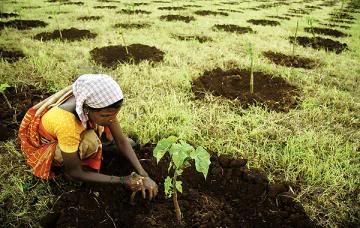
While a useful biofuel source, crop residues also play a crucial role in maintaining soil organic carbon stock. This stock of organic carbon preserves soil functions and our global environment as well ensures the sustainable long-term production of biofuel feedstock (source: Science Daily).

Analysis of the experiments indicates that predicted potential long-term effects of changes in management from conventional tillage to no tillage practices provided insights on proposed management options that were not feasible either due to cost or other factors.

"Harvesting substantial amounts of crop residue under current cropping systems without exogenous carbon (e.g., manure) addition would deplete soil organic carbon, exacerbate risks of soil erosion, increase non-point source pollution, degrade soil, reduce crop yields per unit input of fertilizer and water, and decrease agricultural sustainability," says Hero Gollany, the author of the study (source: Science Daily).

Management practices in these experiments ranged from single cropping to two or three year crop rotations; manure, no fertilizer or fertilizer additions; crop residue returned, and crop residue removed. The predictions also factored diverse climates, soil conditions, fertility management, cropping systems, and crop residue removal practices.

These factors determine that too much of everything will do no good also in our environment as well. The diverse usage of renewable energies sometimes are quite catchy and advantageous to us but if we do not put a thorough study on those, we might end up getting a bit complicated effects of this not only in producing these but also in the environment.

Friday, February 4, 2011

Solar Energy: A Boon to Mankind

With the global warming crisis and the continuous increase in energy rates, man is continually looking for alternative forms of energy.  One of them is the widely accepted Solar Energy – which is very affordable and efficient when it comes to energy yield.  It is practically capturing sun’s ray and converting them into usable energy forms (electrical energy or heat energy). This conversion is done by installing large energy solar panels.

These panels can be installed anywhere in your house, on the roof, on the windows and even on the side of your homes.  There are several types of solar panels in the market today. One is Monocrystalline Silicon panels  which are made from silica sheets thus creating an efficient conductivity but is relatively expensive compared to others. Another is Polycrystalline (or multi-crystal) silicon panels which are made up of individual PV cells but are cheaper and of course, less efficient compared to the Monocrystalline panels. Others use Amorphous silicon panels which are not that efficient in yielding energy but are cheap and affordable.


So what are the pros and cons of solar energy? Obviously there are a lot of advantages compared to the disadvantages when it comes to Solar Power.  The most forthright would be one can save more money over time.  After its installation it is free of charge and you can reap the benefits by just catching the sun’s rays!  It is however evident also that there are political implications of this issue added to the environmental one.  The monopoly of oil in the market is one of the daunting reasons why Solar Power is not as popular at it should have been.  And in addition, the intense global warming and the climate change that is facing the world is immensely alarming that all of us should have a contribution in saving our   environment.  One of the disadvantages of Solar Energy is the upfront cost.  Installation of these solar panels will take a large sum of money before it can actually work.  Many are dissuaded because of this, thus, adding to the hurdles of solar energy’s success. 


With these little steps, we are not only helping Earth to survive, we are helping it to thrive.  Using the sun’s renewable energy will help us lessen our carbon footprints as well as lessen our use of our fossil fuel reserves. Consequently, if this is done, it will drastically lessen pollution as well. Let us all do our part and help Solar Power be a success.


Wednesday, February 2, 2011

Imbalance Ecosystem and the Role of Sustainability

An ecosystem is a biological environment consisting of all the organisms living in a particular area, as well as all the nonliving, physical components of the environment with which the organisms interact, such as air, soil, water, and sunlight. It is all the organisms in a given area, along with the nonliving (abiotic) factors with which they interact; a biological community and its physical environment (source: Wikipedia).

The entire array of organisms inhabiting a particular ecosystem is called a community.  Ecosystems, plants and other photosynthetic organisms are the producers that provide the food. Ecosystems can be permanent or temporary. Ecosystems usually form a number of food webs. Ecosystems are functional units consisting of living things in a given area, non-living chemical and physical factors of their environment, linked together through nutrient cycle and energy flow.
Ecosystems have become particularly important politically since the Convention on Biological Diversity (CBD) - ratified by 192 countries - defines "the protection of ecosystems, natural habitats and the maintenance of viable populations of species in natural surroundings"(source: United Nations Environment Programme. Convention on Biological Diversity. June 1992. UNEP Document no. Na.92-78) as a commitment of ratifying countries. This has created the political necessity to spatially identify ecosystems and somehow distinguish among them. The CBD defines an "ecosystem" as a "dynamic complex of plant, animal and micro-organism communities and their non-living environment interacting as a functional unit" (source: Wikipedia).
With the need of protecting ecosystems, the political need arose to describe and identify them efficiently. Vreugdenhil et al. (Wikipedia) argued that this could be achieved most effectively by using a physiognomic-ecological classification system, as ecosystems are easily recognizable in the field as well as on satellite images. They argued that the structure and seasonality of the associated flora and fauna, complemented with ecological data (such as elevation, humidity, and drainage), are each determining modifiers that separate partially distinct sets of species. This is true not only for plant species, but also for species of animals, fungi and bacteria. The degree of ecosystem distinction is subject to the physiognomic modifiers that can be identified on an image and/or in the field. Where necessary, specific fauna elements can be added, such as seasonal concentrations of animals and the distribution of coral reefs.

The health of humans like all organisms depends on an ecosystem that sustains life in general. However, studies show some evidence that most life-support systems are far from healthy, therefore posing a big threat on human health. It is proven also that some gains in life expectancy and quality of life made during the twentieth century are at risk of being reversed in the twenty-first century.

It is being put to blame that our ecosystem degradation would lead to numerous health factors that poses risks for human life like pollution in water, air and land, the climate change, emerging new diseases from different breakthrough on viruses and bacteria, resurgence of old diseases, and so on and so forth.

With this, it also includes different studies and methods being used to discover natural gas, mining and coal; thus leads to an imbalance in our ecosystem.

The main culprit – humans and its advanced technologies discoveries

We can achieve a balance ecosystem only if we know how to take care of it while discovering and unraveling different breakthrough technologies. It is not that easy task though. As we gear towards the 21st century fever.

But let us always remember the saying that “history repeats itself.” And to be able to achieve a balance ecosystem, hand in hand we need to fully understand the causes and effects of the advancement of technology breakthroughs in our everyday living.

Sunday, January 30, 2011

Sustainability and “Deep” Ecology

Deep ecology is a contemporary ecological philosophy that claims to recognize the inherent worth of other beings aside from their utility. The philosophy emphasizes the interdependent nature of human and non-human life as well as the importance of the ecosystem and natural processes. It provides a foundation for the environmental, ecology and green movements and has fostered a new system of environmental ethics (source: Wikipedia).


Like humanity, its core principle to the living environment as a whole has the same right to live and flourish. It describes itself as "deep" because it persists in asking deeper questions concerning "why" and "how" and thus is concerned with the fundamental philosophical questions about the impacts of human life as one part of the ecosphere rather than with a narrow view of what ecology is.

As it promotes holistic view of the world live in, it also seeks the practicality and application to life itself and its connection to the ecosystem including its function as a whole.

Deep ecology offers a philosophical basis for environmental advocacy which may, in turn, guide human activity against perceived self-destruction.

A further scientific source for deep ecology adduced by Devall and Sessions is the "new physics." which they describe as shattering Descartes’ and Newton’s vision of the universe as a machine explainable in terms of simple linear cause and effect. They propose that Nature is in a state of constant flux and reject the idea of observers as existing independent of their environment (source: Wikipedia).

The central spiritual tenet of deep ecology is that the human species is a part of the Earth and not separate from it. A process of self-realisation or "re-earthing" is used for an individual to intuitively gain an ecocentric perspective. The notion is based on the idea that the more we expand the self to identify with "others" (people, animals, ecosystems), the more we realize ourselves.

However, there are some issues raised concerning deep ecology. Social ecologists pointed out that deep ecology fails to link environmental crises with hierarchy. They pressed that environmental problems are firmly rooted in the manner of human social interaction, and protest that an ecologically sustainable society could still be socially exploitative.

Deep ecologists reject the argument that ecological behaviour is rooted in the social paradigm (according to their view, that is an anthropocentric fallacy), and they maintain that the converse of the social ecologists' objection is also true in that it is equally possible for a socially egalitarian society to continue to exploit the Earth (source: Wikipedia).

The big deal about is that it has something to do with sustainability as it interfaces with economics through the social and ecological consequences of economic activity.

Sustainability economics involves ecological economics where social, cultural, health-related and monetary/financial aspects are integrated. Moving towards sustainability is also a social challenge that entails international and national law, urban planning and transport, local and individual lifestyles and ethical consumerism.

Thursday, January 27, 2011

Rivers and how it flow

The recent phenomenon that has been happening all over the world and has been affecting millions of people around the globe is all about the floods.

Nowadays, as we observe, floods are a bit different from the previous floods we have had experienced.

One factor for this is the overflowing waters from the rivers. Let us have an overview of what rivers are and where do they start and where do they end?

Rivers come in lots of different shapes and sizes, but they all have some things in common. All rivers and streams start at some high point. The high point can be a mountain, hill or other elevated area. Rivers begin in mountains or hills, where rain water or snowmelt collects and forms tiny streams called gullies. Gullies either grow larger when they collect more water and become streams themselves or meet streams and add to the water already in the stream. The merging of one stream to another is known as a tributary. As the water flows down, it may pick up more water from other small streams, springs or from rain or snow melt. These streams may slowly join together to form a larger stream or river.  Small rivers and streams may join together to become larger rivers. Eventually all this water from rivers and streams will run into the ocean or an inland body of water like a lake.
Leaving the high elevations of the mountains and hills and entering the flat plains, the river slows down. Once the river slows down, the pieces of sediment have a chance to fall to the river bottom and be "deposited". These rocks and pebbles are worn smooth and get smaller as the water continues flowing.
Most of the sediment deposition occurs in the plains. The wide and flat valley of the plains takes thousands of years to create. Here, the river flows slowly, making S-shaped curves which are known as meanders. When the river floods, the river will spread out over many miles on either side of its banks. During floods, the valley is smoothed and tiny pieces of sediment are deposited, sculpting the valley and making it even smoother and more flat.
Eventually, a river flows into another large body of water, such as an ocean, bay, or lake. The transition between river and ocean, bay or lake is known as a delta. Most rivers have a delta, an area where the river divides into many channels and river water mixes with sea or lake water as the river water reaches the end of its journey.
From the mountains to the delta, a river does not just flow - it changes the surface of the earth. It cuts rocks, moves boulders, and deposits sediments, constantly attempting to carve away all of the mountains in its path. The goal of the river is to create a wide, flat valley where it can flow smoothly towards the ocean (source: Basic Geography of Oceans and Rivers).
Taking good care of our rivers as well as our creeks and allowing passage could somehow prevent too much flooding to happen in the near future.

Monday, January 24, 2011

Waste Management and Eco-Living

Waste (also known as rubbish, trash, refuse, garbage, junk) is unwanted or useless materials. Litter is waste which has been disposed of improperly. In living organisms, waste is the unwanted substances or toxins that are expelled from them (source: Wikipedia).
All over the nation, we are aware that wastes nowadays are seemed to be one of the factors why we are suffering from climate change, floods which leads to destruction of properties, businesses and loss of lives.
As early as 1980s, there have been various studies and suggestions on proper management of waste but as we enter into the new millennium, it became worse. Volume of waste has gone up- over 50% of resources are returned to environment as waste material (streams to roaring rivers). Chemically active wastes create more problems for regulators. Ability of natural system to absorb and assimilate is threatened. Add to that the differing perspective of management.
These factors continuously threaten us and putting us more in danger.
Solution:
·         Low Waste Strategy – this strategy defines continued capability and capacity for the safe, secure and environmentally responsible management and disposal of waste materials.
·         Scrap and Spot – this means we cannot use an old method and apply it to today’s present situation particularly in waste management and flood control systems. Spot some new ways and develop some new strategies that we can apply for today and in the next 15 years.
·         Lean on Nature – when everything turns bad, lean on and adopt our mother nature as a guide. Go back to basics and carefully plan and apply some new trends.
What does nature do? 
·         Processing and recycling the materials in closed loops, evolved over billions of years.
·         Integrated and linked energy and material cycles.
·         Hierarchal arranged in form a web.
This time around, the mantra that everybody is applying to their homes is:
·         Reduce at the start of the process.
·         Reuse during the product development.
·         Recycle at the end of the product life.
·         Final disposal.

Economic efficiency also plays a greater role in reminding us the relationship between monetary values of ends and means. With this in mind, better housekeeping and plant management can be considered as one big factor in solid waste management.
Industrial ecology factors - cradle to grave replaced by cradle to birth, process and product design to be regenerative rather than depletive, follow the transport of energy and material all through industrial, economic, social and environmental system.
All of these along with tons of suggestions and studies around the world would be nothing if we will not try to practice it in our own home. Waste management and eco-living works hand in hand. Together, we will achieve the greater goal of a clean and green future if we know how to manage our own waste and embrace nature’s thousand changing ways.

Citation: Waste Management – An Ecology Way, RN Singh

Sunday, January 23, 2011

Green Loans and Its Benefits

It is all about getting green and being supported by the government – Green Loans Household sustainability report is promoted and subsidized by Australian government to help each Australian living more efficiently, reducing carbon footprint and saving money in a long-term way.
A household sustainability assessment program is available to renters and home owners and provides you the house holder with a free report that provides insights into the ecological impacts of existing homes, identifies cost effective ways to reduce those impacts and empowers you to actively reduce them by changing your lifestyle and living behaviours and retrofitting or upgrading household appliances.
The goal is simple - to reduce environmental emissions and depletions from housing to deliver sustainable outcomes for future generations.
The report focuses on the way you live, interact and how you use your appliances as well as water and energy usage at home. These include subsequent emission and proper waste recycling. The 3 Rs are involved, reduce, reuse and recycle.


As with our previous articles, a simple change of practice on how we use our appliances like refrigerators, air conditioning, heaters, and television, could give us a big impact in saving energy costs with as much as 10-20% and automatic subsequent reduction in green house emissions.
Many other simple changes can be made that provide equal benefits to users and the environment such as with a solar hot water system. By converting or upgrading to a solar hot water system, you could get up to 70% of your hot water for free.
A simple change to boiling water with an electric kettle or gas cooker generates about half as much greenhouse gas as a microwave oven or an electric stove.
Carbon footprint can be reduced if you have the knowledge or seek knowledge of an expert on this field through installing insulation in your ceiling and of course government is there to help you with the grants they offer.
It is a fact that an un-insulated ceiling could waste up to 35% of winter heating and un-insulated walls waste another 10 to 20%. In summer, you could be gaining the same amount of heat when you want to keep cool.
If you buy appliances with more stars on the energy rating label, the more stars means the more efficient the appliance is.
How to get involved with Green Loans program? It’s so easy:
First, book your free household sustainability assessment.
Then get your home sustainability report.
The last step is for you discern.
It is your freewill to choose which recommendations you are going to do or take to have a sustainable home.
You may also apply for an interest-free Green Loan up to four years of up to $10,000 to make the bigger changes or visit Green Loans office by the government to inquire about this.
Simple yet it will bring a big impact in your life. So, better plan wisely and enjoy the luxury of an efficient home.